
When Football Lived in the Game Room
Before football video games became realistic simulations played alone at home, football was loud, physical and public.
It lived in arcades.
Coin-operated football games of the 1980s and 1990s created a distinct form of football culture, shaped by immediacy, competition and visual impact. These games were not designed to reproduce football faithfully, but to translate its excitement into a few intense minutes.
In doing so, they formed a parallel history of football — one based on spectacle, recognition and shared experience.
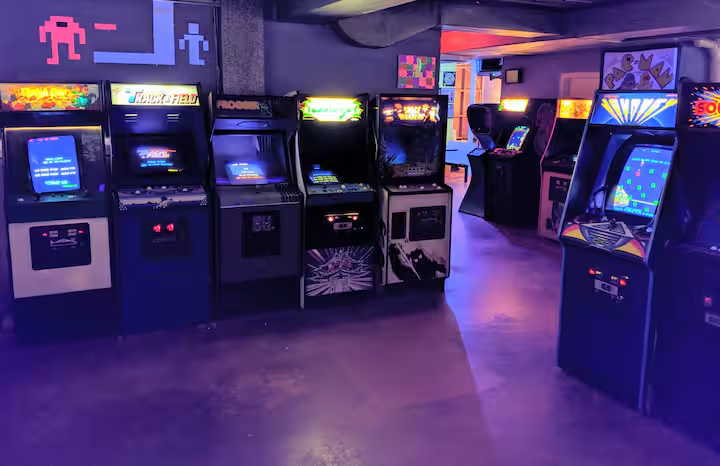
The Arcade as a Cultural Environment
Arcades were social spaces.
Players stood close to one another, watched matches in progress, challenged winners and learned by observing.
There was no privacy, no pause button and no second chances without inserting another coin.
This environment influenced every design decision:
- games had to be understood instantly
- controls had to be intuitive
- visuals had to be bold and readable
- excitement had to arrive immediately
Arcade football was not about immersion.
It was about impact.
Design Constraints of Coin-Op Football Games
Arcade football games followed strict rules dictated by the coin-op business model:
- very short sessions
- immediate gratification
- high replay value
- strong audiovisual feedback
As a result:
- tactics were simplified
- matches were fast
- goals were exaggerated events
Arcade football stripped the sport down to its most emotional elements.
Early Arcade Football Experiments (Mid-1980s)
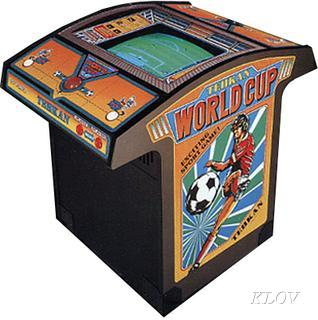
One of the first influential arcade football titles was Tehkan World Cup.
Gameplay system
- trackball control instead of joystick
- extreme player speed
- physical, instinctive interaction
The trackball made football physical.
Players pushed, spun and reacted with their bodies, perfectly matching the energy of the arcade.
This game established a core arcade principle: football as movement and reaction, not structure.
Action Over Tactics
Unlike home computer football games, early arcade titles minimized:
- formations
- positional discipline
- long-term strategy
Instead, they focused on:
- quick passes
- sudden shots
- constant forward momentum
The goal was not to understand football deeply, but to feel it instantly.
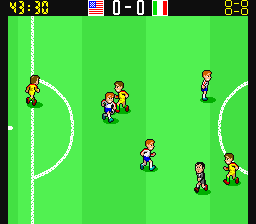
Kick and Run and the Late 1980s Refinement
With Kick and Run, arcade football gained smoother scrolling and clearer roles.
Gameplay system
- side-scrolling pitch
- simplified team structure
- strong sense of rhythm and flow
The game conveyed football through movement rather than realism, turning the pitch into a kinetic stage.
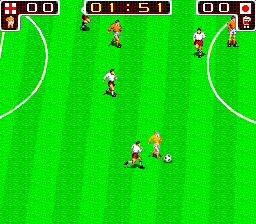
Hat Trick Hero: Football Reduced to Essence
Hat Trick Hero represents arcade football in its purest form.
Gameplay system
- extremely short actions
- powerful shots
- one-on-one focus
- exaggerated goalkeeper reactions
Football became:
ball → shot → crowd reaction
Perfectly suited to noisy, crowded arcades.
The Early 1990s: Arcade Football Peaks
The early 1990s were the golden age of arcade football.
Technology allowed for larger sprites, richer colors and more expressive animations — without abandoning arcade philosophy.
Tecmo World Cup: A Bridge Between Action and Structure
Tecmo World Cup introduced a more readable pitch layout.
Gameplay system
- side-view perspective
- clearer passing options
- controlled pace compared to pure action titles
Tecmo games created a bridge between arcade immediacy and basic football logic.
Super Sidekicks: The Icon of Arcade Football
No arcade football history is complete without Super Sidekicks.
Gameplay system
- national teams only
- exaggerated shots and goal animations
- strong visual feedback
- fast but understandable gameplay
Super Sidekicks captured football as spectacle.
Goals felt dramatic, losses felt brutal, and every match demanded attention.
It perfectly aligned with arcade culture.
National Identity as Visual Shortcut
Arcade football relied heavily on national identity:
- flags
- colors
- simplified team stereotypes
This allowed instant recognition, even for casual players.
Football became a global language spoken through color and motion.
Goal! and Minimalist Football
With Goal!, football was reduced to near abstraction.
Gameplay system
- very few players visible
- small pitch
- ultra-fast actions
The objective was not realism, but tension and immediacy.
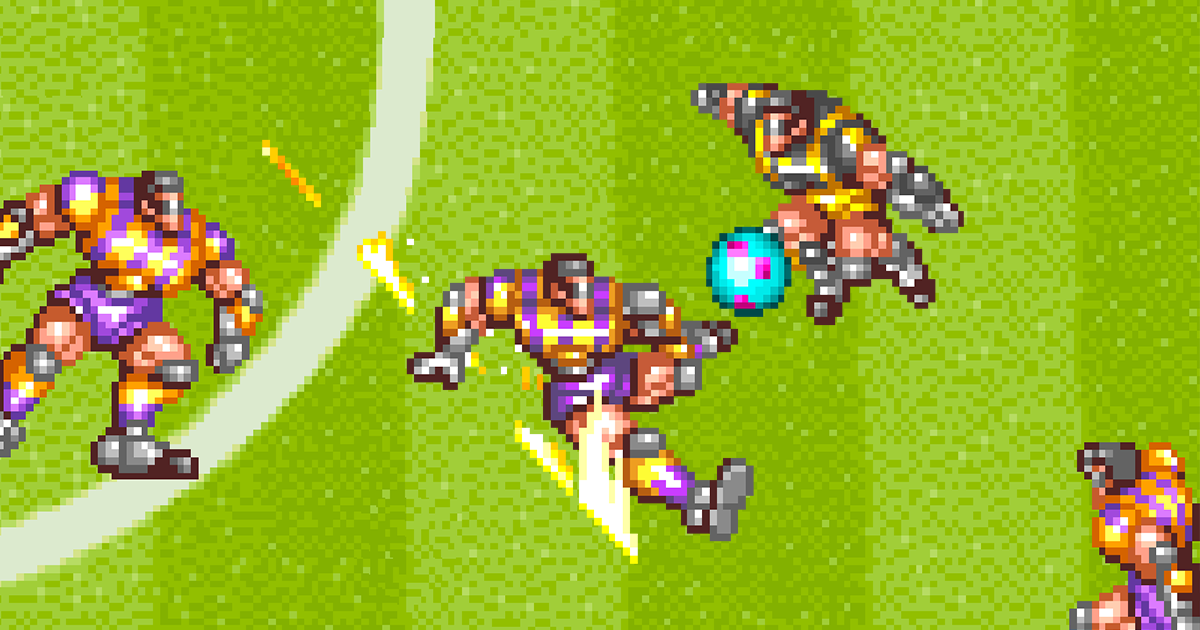
Soccer Brawl: Football as Arcade Combat
Soccer Brawl pushed exaggeration even further.
Gameplay system
- 3-a-side matches
- tiny pitch
- super shots
- aggressive collisions
Football became almost a fighting game with a ball — perfectly aligned with arcade spectacle.
Pleasure Goal and the Search for Balance
Less famous but notable, Pleasure Goal attempted balance.
Gameplay system
- faster than simulations
- more passing than pure arcade
- larger pitch
It shows how arcade developers experimented with blending logic and speed.
Football Frenzy: The Late Arcade Era
Football Frenzy represents one of the last major arcade football efforts.
Gameplay system
- high speed
- clean visuals
- instant controls
It refined arcade football just as arcades themselves began to disappear.
Physical Controls and Public Competition
Arcade football was physical:
- trackballs
- heavy joysticks
- loud buttons
Matches were played:
- face-to-face
- under pressure
- in front of spectators
Winning mattered.
Losing cost money.
This environment amplified emotion and memory.
Why Arcade Football Felt Different
Arcade football games felt unique because they were built around:
- visibility
- immediacy
- shared experience
They transformed football into:
- action
- emotion
- recognition
Rather than simulation.
The Decline of Arcade Football
By the late 1990s:
- home consoles improved
- simulations became dominant
- arcades declined
Arcade football slowly disappeared — but its cultural influence remained.
Arcade Football as Cultural Reference Today
Today, arcade football aesthetics live on through:
- pixel art
- retro design
- independent football culture
- nostalgic reinterpretations
They evoke:
- competition
- spectacle
- shared memory
Instantly recognizable to those who lived that era.
Conclusion
Arcade football games of the 1980s and 1990s were not simplified versions of football.
They were a distinct interpretation of the sport, shaped by environment, technology and culture.
By prioritizing immediacy, clarity and emotion, coin-op football games created a lasting cultural memory that still influences how football is visualized today.
They endure not because they were realistic, but because they captured football as a shared, physical and emotional experience.