
How Digital Football Shaped a Generation
Football video games in the 1980s and 1990s were not merely entertainment products.
They were cultural artefacts that shaped how football was understood, visualized and remembered by an entire generation.
Long before realism and licenses dominated the genre, football video games translated the game into systems, symbols and abstractions — reinforcing tactical thinking, identity and memory.
The First Digital Representations of Football (Late 1970s – Early 1980s)
One of the earliest examples of digital football is NASL Soccer, released at the end of the 1970s.
Due to extreme hardware limitations:
- players were represented as simple shapes
- the pitch was a static grid
- movement was highly constrained
Yet the core logic of football — passing, positioning and direction — was already present.
These early games did not attempt realism.
They focused on structure, reflecting how football itself was discussed and understood at the time.
The Home Computer Era and Tactical Abstraction
During the early 1980s, home computers expanded the reach of football video games.
Titles like International Soccer and Match Day emphasized:
- top-down perspectives
- simplified player control
- clear spatial logic
Football was represented as movement within space rather than physical realism.
This abstraction mirrored real football culture, where fans discussed formations and positioning as much as individual skill.
The Importance of Space and Passing
A defining characteristic of early football games was the importance of space.
Unlike modern titles focused on animation and physics, early games forced players to:
- anticipate movement
- exploit gaps
- understand angles
Passing was deliberate and often unforgiving.
This reinforced a tactical understanding of football, aligning perfectly with the analytical mindset of fans during the 1980s.
The Late 1980s: Identity Begins to Emerge
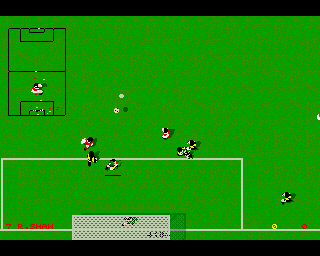
By the late 1980s, football video games began introducing stronger visual identity.
Games such as Kick Off pushed speed and precision to the forefront, while still relying on abstract visuals.
Despite the lack of official licenses, teams were instantly recognizable through:
- colour combinations
- formation behaviour
- gameplay rhythm
This proved that football identity could be communicated without logos or realism.
The Early 1990s: A Cultural Turning Point
The early 1990s represent a major shift.
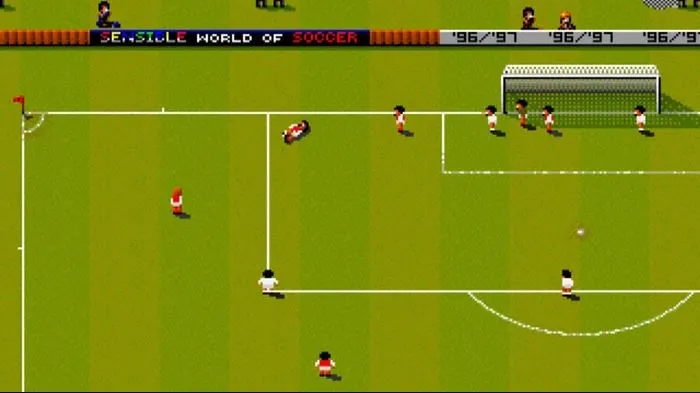
Games like Sensible Soccer became cultural phenomena.
Their defining features included:
- extreme gameplay clarity
- minimalist pixel art
- visible formations
- fast, readable action
Football was reduced to its essential logic — and that logic was immediately understandable to fans.
Sensible Soccer and the Codification of Football Memory
Sensible Soccer deserves special attention.
It transformed football into:
- patterns of movement
- positional balance
- timing and intuition
Players learned football systems instinctively.
For many fans, this game became a reference point for how football should feel, not how it should look.
Its influence extends far beyond gaming, shaping modern pixel-art football aesthetics and design language.
Alternative Systems and Styles in the 1990s
The 1990s saw the coexistence of multiple football video game philosophies.
- Kick Off 2 emphasized speed and manual control
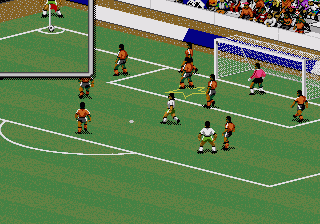
- FIFA International Soccer introduced a broadcast-style perspective
- Actua Soccer experimented with early 3D representation
Each system reflected a different interpretation of football:
- tactical abstraction
- televised realism
- technological ambition
Yet all remained tied to identity and playability rather than spectacle.
Formation as Visual and Tactical Language
One of the most important contributions of 1990s football games was the visualization of formations.
Games allowed players to:
- choose tactical setups
- see positional balance on screen
- understand spatial consequences
For many fans, video games were the first medium where formations truly made sense.
They translated abstract tactical concepts into visible systems.
Football Video Games as Social Experience
Football video games were inherently social.
Titles like Sensible Soccer and FIFA International Soccer became:
- local multiplayer rituals
- sources of rivalry
- shared cultural reference points
They extended football culture into bedrooms, schools and living rooms.
Why Retro Football Games Still Matter
Many modern fans continue to return to classic football games because they offer:
- clarity over complexity
- imagination over realism
- identity over licensing
They represent football as a system, not a cinematic experience.
This is why their aesthetic and logic remain influential today.
From Video Games to Design and Culture
The visual language of 80s and 90s football video games — pixel art, top-down views, abstract players — now influences:
- graphic design
- illustration
- fashion
- independent football culture
These references are immediately recognizable because they tap into shared memory.
Conclusion
Football video games of the 1980s and 1990s were not side products of football culture.
They were central to how football was learned, understood and remembered.
By translating football into systems, symbols and abstractions, they created a cultural language that still resonates today.
Their legacy endures because they captured football’s essence — not through realism, but through understanding.